
Mass Extinctions, Part I.
Five mass extinctions in the history of the Earth, the devastating times the ancient living organisms had to endure (6 minutes read)

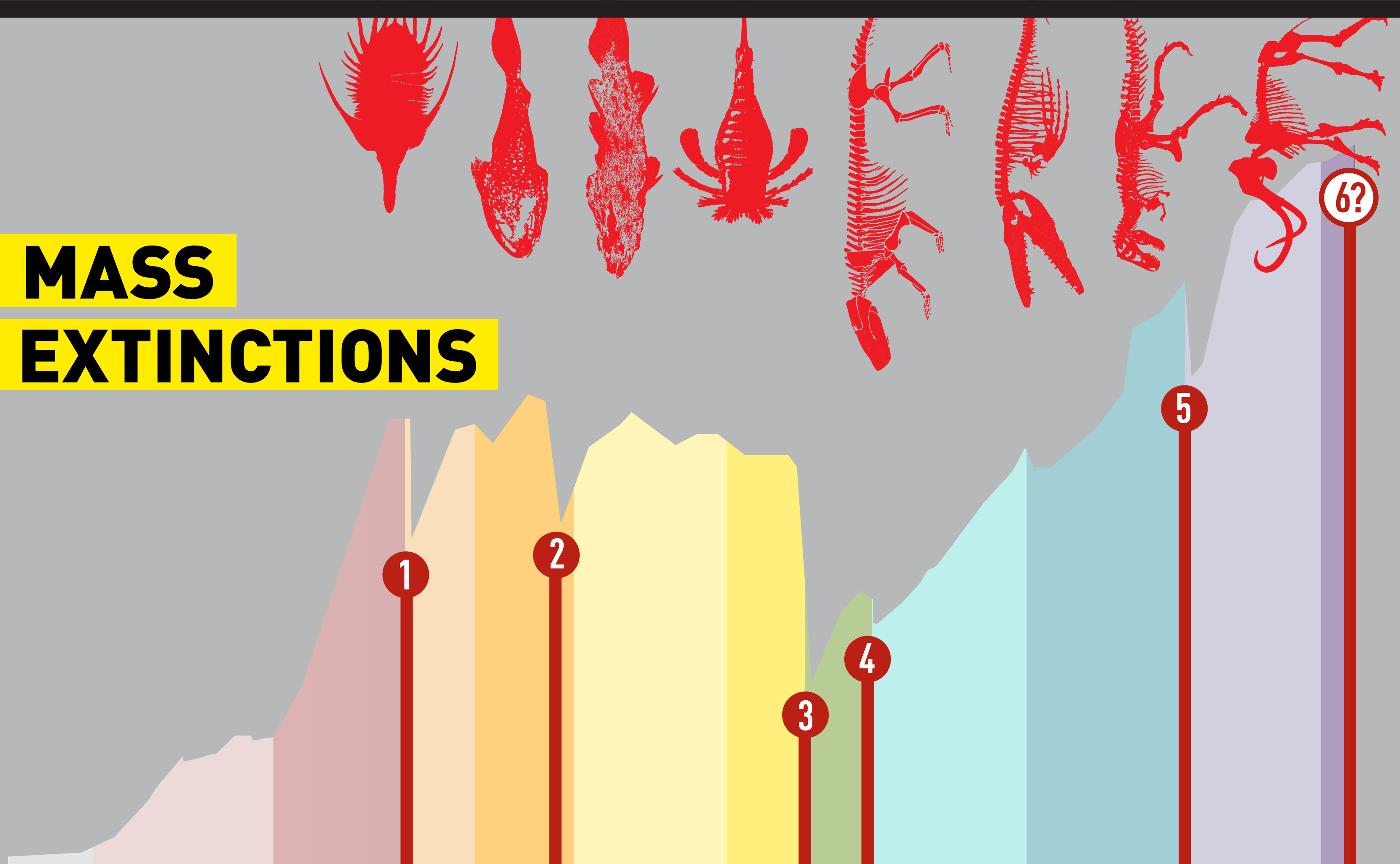
Figure 1. Mass Extinctions graph (Source: Marash and Rossman, World Science Festival)
The famous phrase that would suit this topic is “all good things must come to an end”, which basically means nothing lasts forever. It’s cliché, I know. Nevertheless, it fits and describes life in general. For instance, have you ever heard about the Immortal Jellyfish? This species is biologically immortal, yet death still haunts them, yet they still die. Talk about the weight of carrying the name, huh?
Anyway, let’s get to the point, I’ll be talking about the end times, but in the context of our blue planet. The planet that you have set foot on ever since you took your first steps have had several catastrophic, apocalyptic, the end of the world events (they were as worst as it sounds like) in the past that drastically wiped out many species since its emergence 4.6 billion-years-ago. These are called mass extinctions which is when more than 50-70% of species on Earth significantly going on extinction in brief periods of time (Cutraro and Ojalvo, 2011). Scientists acknowledged there are five extinctions events on Earth which are considered as major extinction alternatively known as the Big Five (see Fig. 1).
For the record, 99% species that have ever been reported to roam the Earth, are already extinct. Hence, be grateful, humankind are one of many species that is part of that 1% and still got the chance to travel around the Earth as well as reading this article, like you currently are! Lesson learnt, never take anything for granted. We might be lucky, maybe for now.
As far as the extinction is concerned, maybe the first thing that popped up into your mind is the death of the mighty dinosaurs, and the genesis of their disappearance was because one day an asteroid decided to hit Earth and killed those poor large reptiles. However, other events are worth knowing too! The doomsday of other organisms. I use the word doomsday because they went extinct forever and they didn’t have a chance to perceive that new organisms had filled their spots as the brand-new dominant species to rule the Earth. It’s like really an Armageddon for them, just different ending. This is what I meant about nothing lasts forever!
Late-Ordovician/Ordovician-Silurian (~440 Mya) – The First One out of the Big Five.
This period was the age of invertebrates, but there were a few vertebrates can be found. For the record, if you had the chance to travel here (time travel by any chance?), it might make you wet yourself. Wait, that came out wrong. I mean literally wet; you know because of high sea level? Anyway, life on Earth was pretty much on the ocean and occupied by marine invertebrates, trilobites, corals and brachiopods that inhabited the shallow seas (Fig. 2). They just kept swimming and kept swimming peacefully and minding their own business until…
The end of the time knocking on their door during the terminal of the Ordovician period. Scientists believed that the supercontinent at that time, Gondwana was shifting towards the South Pole, where Antarctica is currently located at the present day. This led to a fall in temperature and influenced the growth of ice sheets which made sea level dropped and significantly impacted the shallow sea-dwellers (Finnegan et al., 2012).
The aftermath of this event: 86% of the species at that time was wiped out completely, but the survivors lived a new life and carried on! Afterwards, in the Silurian period (period after Ordovician), first insects and first jawed fish started to make an appearance and then they stepped into the spotlight.
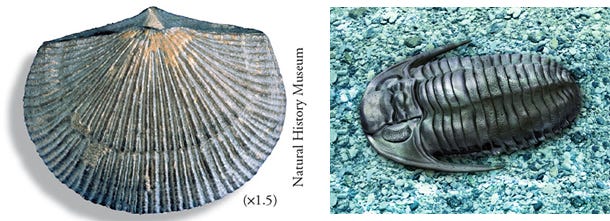
Figure 2. Brachiopods (left) and Trilobites (right) (Source: British Geological Survey & DK Findout)
Late-Devonian (~374 Mya) – When Plants were the ‘Bad Guys’
The Devonian period was the age of fishes. Pretty much 85% of the Earth was comprised of oceans at this period, and the climate was warm and during the early time of this period, no trees but lots of moss, mollusc, early arthropods, Placoderms which was species of armoured fish massive sharp jaws. Reef-building organisms were also abundances during this time (Hu et al., 2017). In further to that, insects and early amphibians are amongst organisms found in this period.
But then, the extinctions return and haunt the living. The causes of the mass extinctions are still not specific, however, scientists believed it had something to with CO2 depletion which caused temperature and sea level to fall but this time, what influenced those things are amazingly surprising...
The plants. Yes, you heard it right. Plants, the evolution of vascular plants (trees) and the first emergence of the first forest is a factor contributing to mass extinctions during the end of this period. Additionally, plants also changed soils composition, and the nutrients sourced on the soil become swept off to the ocean and subsequently causing the algae in the sea to bloom. The reason for that is because sadly, algae sucked up oxygen and creating the sea to become anoxia or lack of oxygen and killed the sea dwellers (Algeo et al., 1995).
It contributed to killing about 75% of the species but most marine organisms that had a more significant impact upon this occurrence. Nonetheless, behind something terrible, there is a good thing that follows, right? In this case, because there was more breathable air in the atmosphere, some marine organisms started to evolve and adapted to the terrestrial, for example the lobe-finned fish – early ancestors of the amphibians and four-legged animals with backbones of the present days. Horray! Evolution time! Go vertebrates!
Late-Permian (~250 Mya) – The Great Dying
You, my honourable readers, lucky enough you weren’t a living thing that lived during this period or had to get through this extinction event. Late Permian was the biggest mass extinction out of the big five where 96% marine species and 75% land species on Earth were sadly gone for good. It is also known as the mass extinction of insects.
The caused were following volcanic activities from the Siberian Traps which inevitably released gasses that would destroy the ozone layer. Moreover, more CO2 outgassed from eruption to the atmosphere resulted in increased in temperature the average temperature of the ocean was 10 – 30°C warmer than the present-day (Lewis, 2014).
That was not just it! Ocean also acts carbon sink (take carbon out of the atmosphere). Hence, a high concentration of the carbon dioxide released by the eruptions would have been absorbed by the oceans. High levels of dissolved carbon dioxide in seawater are toxic to many marine invertebrates as well as the dissolved carbon dioxide would have produced changes in seawater chemistry that may have made it difficult for some marine invertebrates, such as corals, to grow shells or skeletons.
To make the matter worse, there was volcanic activity below sea level and resulted in methane hydrate reservoirs below the seafloor and decimated the seas because of the period of too much oxygen (hyperoxia) and too little (anoxia), hence become unhabitable for marine organisms (Brand et al., 2016)
It is called the great dying for a reason, I guess. Never underestimate the power of mother nature, mother of mass extinctions and all mothers in the world!
Late-Triassic/Triassic-Jurassic (~200 Mya) – Short Time Recovery.
Wherever you are, if you are living organisms, death always follows. In this case, the living was only given around 50 million years to recover before another extinction event came to haunt them, again. Well, if you love dinosaurs, you might be happy and sad at the same time. During the beginning of this period, early small dinosaurs started to appear and roamed the supercontinent of Pangea that was formed during the early Permian period. Reptiles were the dominant species, and first mammals began to emerge.
At the end of this period, Pangea cracked because of the prehistoric squirrel chasing a nut and spinning the goddamn Earth core and contributed to the continental drift. No, not that one. Sorry, my childhood was brainwashed by this movie. I loved it, still do. Anyway, the tectonic movements and volcanic activities are the culprits. Almost forgot, the Atlantic Ocean was formed too. Eruptions had a knock-on effect on more CO2 outgassing to the atmosphere, increasing temperature and made the ocean too acidic for marine life
Therefore, the causes were predominantly CO2 increased from volcanic eruptions, made global warming more extreme and caused 80% of the species on Earth wiped out. But then again, life goes on. Nature recovers, new creatures emerge.
Late Cretaceous (K/T Boundary) (~65 Mya) – The Fall of the Dinosaurs
For about 165 years, dinosaurs ruled the world with flowering plants appeared, birds can be found flying around. However, another extinction event knocking on the door and said “Dread it, run from it. Destiny arrives the same, and now it’s here or should I say, I am!” - The reign of the dinosaurs ended here; the kingdom has fallen, they all perished.
An asteroid headed towards our home and hit Earth precisely on the Yucatan Peninsula, Mexico, creating seismic waves that radiated across the globe and contributed to Earthquakes in many areas. Consequently, the impact of because of the collision covered the atmosphere with dust, baking the Earth with heat, promoted storms and resulted in precipitation but with burning hale and it blocked the sunlight. Small mammals and birds survived and evolved since then. It killed around 76% of the species at that time.
That’s about it really, about the extinctions, doomsday, anything you want to call it. Just a small conclusion here but it is essential, if you have high CO2, you’ll get a warmer temperature and high sea level and vice versa. Therefore, it is significant to maintain our current CO2 level or else, we’re going to be as doomed as the ancient organisms were.
Morever, scientists are still debating about the cause that sparked off Late Ordovician, Late-Devonian and Late-Triassic. Despite that all the events occurred randomly and naturally from each one, but it is clear to see factors which stimulated and triggered these cataclysms are mainly changing climate, changes in atmospheric concentration (CO2 and O2 level) and changes in ocean temperature and acidity or more precisely its chemistry (Lewis, 2014). Change is the only constant in life indeed.
A fundamental lesson from all these is that dominant species at that time usually severely hurt the most. Therefore, we gotta be careful about it, we need to take the right decision going forward. By studying the past and examining it closely, it can help us to find answers and learn the lesson to then apply it for the present or future days. Interestingly, all those events occurred at different times, but they are mostly influenced by similar factors. Thus, knowing the factors that stand out, we can predict what the future shall offer the present-day organisms should the current situation aren’t improving or in other words, worsen.
So then, new questions have to be asked: how about the sixth mass extinction? Are we in it already? Is it far away from the point we are now? How are we preparing it? A discussion for another day...
Thanks to all the vertebrates, especially the most advanced species on Earth, the notorious Homo sapiens who have finished reading this article.
Cheers. Stay curious.
Adhia